
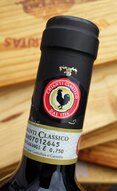
How to read the Chianti Classico wine label?
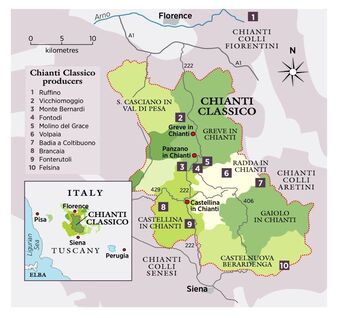 The Region Chianti Classico is the historic heartland of the region, firmly established between Florence in the north and Sienna in the south covering 71,800 hectares (of which approximately 10% is under vine.) The area was delimited in 1932 and consists of nine municipalities including Castellina in Chianti, Gaiole in Chianti, Greve in Chianti and Radda in Chianti and parts of Barberino Tavarnelle, Castelnuovo Berardenga, Poggibonsi, San Casciano Val di Pesa. These place names can appear on the label.
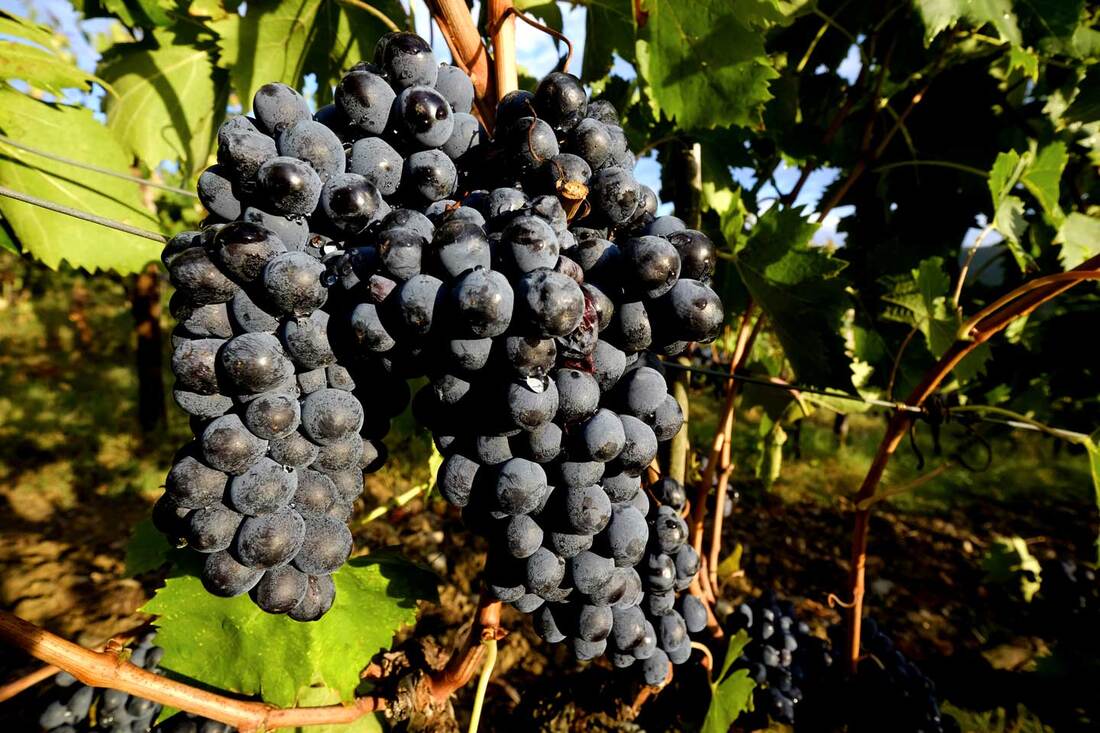 The Grape To understand Chianti Classico is to understand the grape Sangiovese and its styles. While winemakers have many choices today, regulations regarding winemaking standards and the style names that appear on the wine labels keep things in check, or complicate things depending on how you look at it. The regulations establish a minimum standard required. Sangiovese is one of the most widely planted grape varieties in Italy with a significant amount produced in central Italy and further south. Parent varieties are Calabrese di Montenuovo and Ciliegiolo. There are lots of synonyms for Sangiovese in the central and southern regions of Italy with the first records of grape planting and wine making going back to the 1600s. Grape Synonyms Nielluccio, Sangioveto, Sangiovese Grosso, Sangiovese Piccolo, Brunello, Prugnolo Gentile, Morellino. For those who joined the session on Spain and Portugal, this is a consistent thread that one grape can have so many names. How Sangiovese Grows Sangiovese is a late ripening variety that doesn’t like a lot of rain. It prefers south facing slopes with altitudes between 150 and 500 meters. Soils vary from friable, shaly clay called “galestro” with some regions having more clay and others more sand. Sangiovese grows well with vine density at about 7000 vines per hectare. In general quality wine tends towards lower yields and attention to detail in the vineyard. 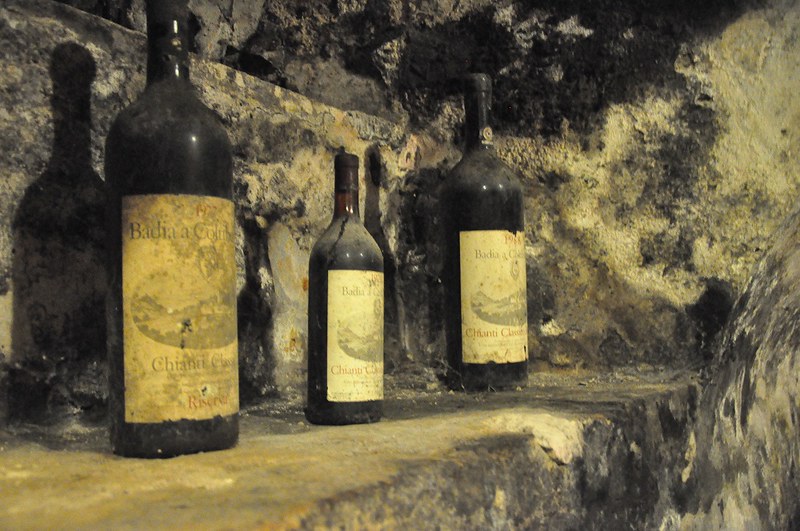 Styles of Chianti Classico The defining character of Sangiovese is its aromas and flavours, that of ripe red fruit (tart red cherry, red currant, red plum) with tart refreshing acidity and a range of herbal notes like oregano, sage and thyme with a savoury quality and a black tea like finish. Tannin levels are moderate but with age, more integrated and smooth. Today the styles are becoming richer, with a smoother texture and softer tannins. What does it mean? Chianti – The wine will be 70% Sangiovese, considered the original Chianti, a basic style that is available broadly. The blend includes 30% made up of approved grape varieties (red & white) with a total alcohol of 12% abv. The prices are very reasonable for this category. Bottle prices can be as low as $15 CDN in BC. Chianti Classico – Here the wines is 80% Sangiovese blended 20% with other permitted red grape varieties. Typically 11 months of ageing (anata). No white grapes are allowed in the blend as of 2006. Total alcohol must be a minimum of 12.5% abv. Prices are often higher than Chianti but still good value. Bottle prices start at $25 and up Chianti Classico Riserva – This blend is similar to Chianti Classico but with 24 months of ageing. Oak ageing is at the discretion of the winery but you can expect some character from maturation in cask (large or small barrels). Bottle prices usually range from $40 and up. Chianti Classico Gran Selezione – This blend is similar to Chianti Classic with 30 months of ageing and may be up to 100% Sangiovese. The fruit must be estate-grown grapes and approval from a tasting panel is required before use of the classification. Oak ageing is at the discretion of the winery as with Riserva category but typically there is more use of new oak. These bottles are usually the most expensive ranging from $50 and up. Other Grapes in the Blend Local: Canaiolo Nero, Ciliegiolo, Colorino, Fogliatonda, Malvasia Nera, Mammolo, Pugnitello, International: Cabernet Franc, Cabernet Sauvignon, Merlot, Syrah Get to know Chianti Classico!
There is so much more to discover when it comes to wines of Central Italy and especially wines of Tuscany. Get to know the staff in a local wine shop. Try different styles and find the producer you like. If this information has helped you with your purchases or your studies, please leave a comment below. Salute!
0 Comments
Leave a Reply. |
AUTHOR
I'm Good Wine Gal.
I blog about "good wine" and how to find it! Join me on my adventures of finding beautiful wine loving places, people and those special bottles we all get excited about. Archives
July 2024
|
Photos from Magnus Reuterdahl, wuestenigel, Fareham Wine